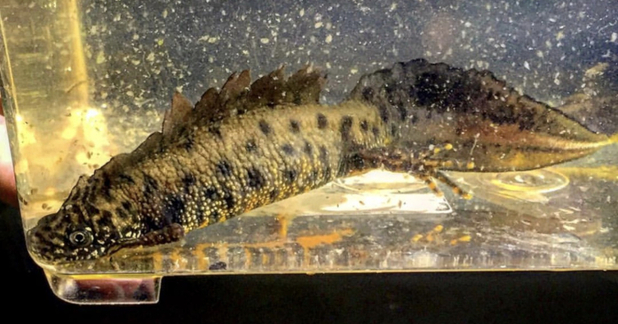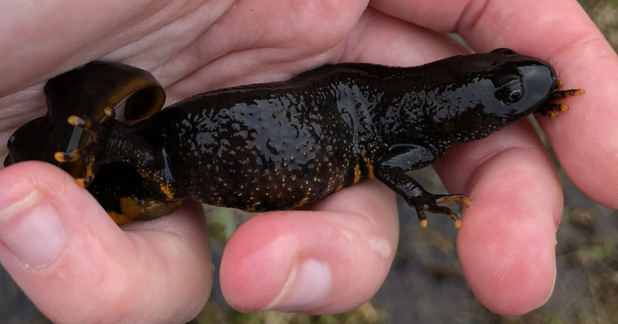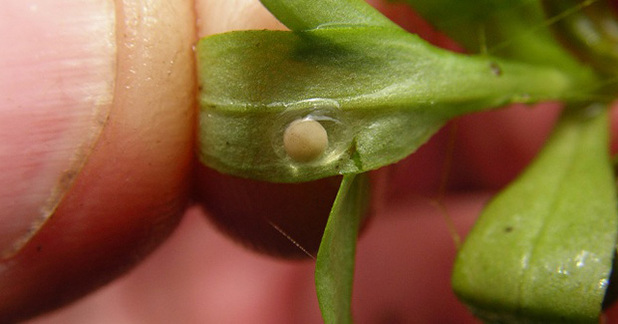
Great crested newts (GCN) are a European protected species; legislation protects individual newts, their eggs and their breeding sites and resting places. If there is a waterbody on your site, or within 500 metres of the site boundary, you may need to consider the impacts of your development on great crested newt as part of your planning application.
Actions that would cause you to break the law include:
This species is frequently encountered in development projects; although protected, the species is fairly widespread in the UK.
Activities that can affect great crested newt and that may prompt the need for surveys include:
If you are unsure if the works you are planning will affect great crested newt, it is best to speak to a qualified ecologist as far in advance of the project as possible. Survey work can only be undertaken during the spring when the adults can be found breeding within waterbodies. When not breeding, great crested newt are found as far as 500 metres from their breeding ponds.
Survey data collated then is used to assess the impact of the development and to devise appropriate mitigation strategies. We have successfully assisted with securing planning consents where great crested newt are present and have obtained many Natural England licences for development works affecting great crested newt and their breeding and terrestrial habitat. Mitigation works undertaken include terrestrial and aquatic habitat creation, maintenance, and the management of numerous large-scale exclusion and translocation projects. Our ecologists hold Natural England great crested newt licences and are highly experienced in mitigation works and the supervision of habitat removal.
To establish presence or likely absence of great crested newt, four surveys are carried out between mid-March and mid-June. An additional two surveys are then needed if great crested newt are found to be present. See our survey timetable for details.
We also offer environmental DNA (eDNA) testing where water samples can be tested for great crested newt gametes during the breeding season and thereby the presence or likely absence of the species in that waterbody. If a water sample proves positive for great crested newt presence, further surveys may be required. However, if a water sample proves negative, additional great crested newt surveys can be avoided and costs significantly reduced. eDNA testing can only be carried out between 15th April and 30th June, therefore it is important to consider the potential impacts on great crested newt as early as possible in your project.